Need help?
Need help?
Need help?
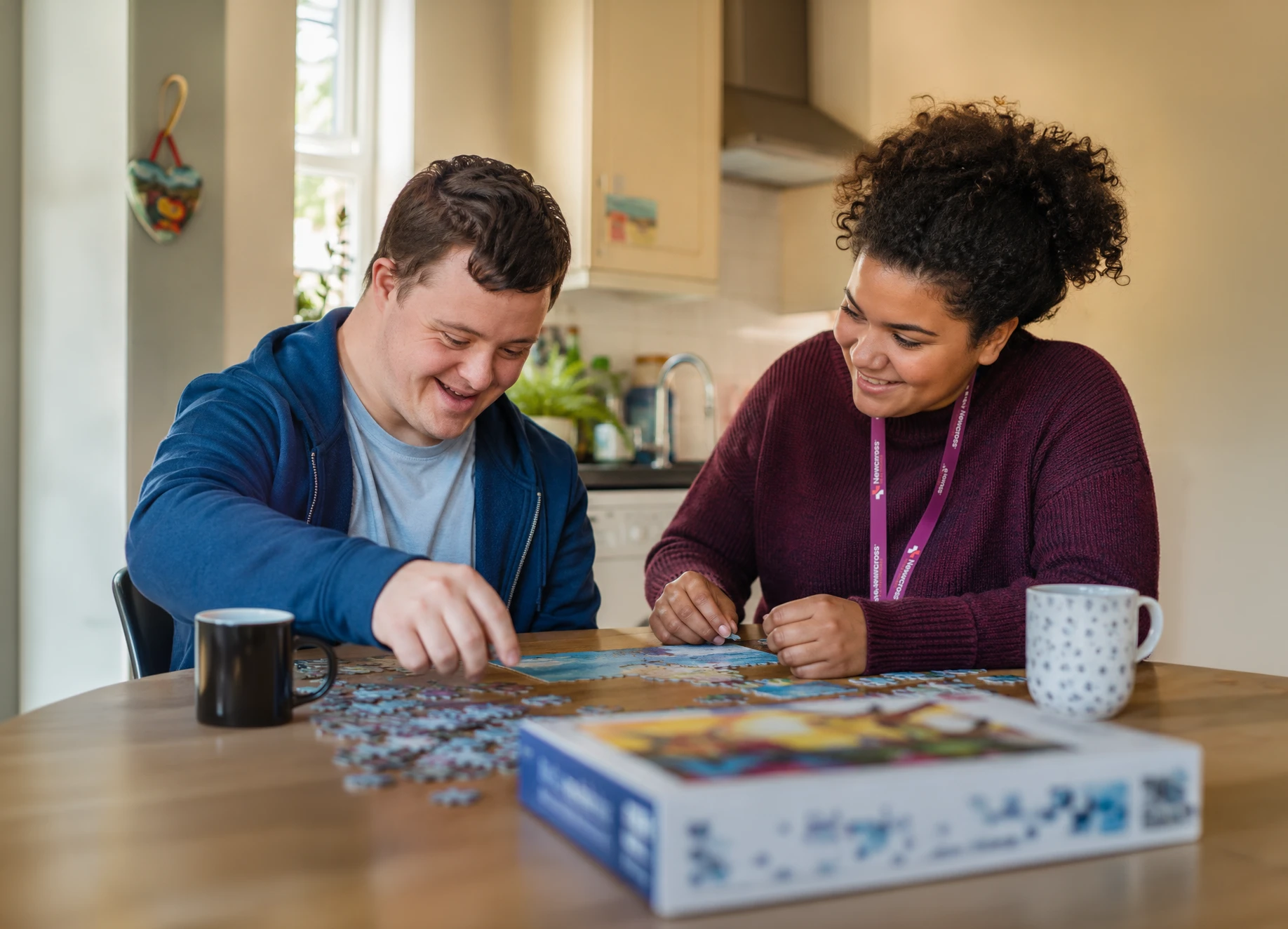
Learning disabilities and autism care
Person-centred support at home that builds independence, choice and inclusion.
Learning disabilities and autism care
Person-centred support at home that builds independence, choice and inclusion.
Learning disabilities and autism care
Person-centred support at home that builds independence, choice and inclusion.
Learning disability and autism care
built around who they are
No two people are the same. We take time to understand how someone communicates, what they enjoy and what helps them feel at ease, then build support around them.
Learning disability and autism care
built around who they are
No two people are the same. We take time to understand how someone communicates, what they enjoy and what helps them feel at ease, then build support around them.
Learning disability and autism care
built around who they are
No two people are the same. We take time to understand how someone communicates, what they enjoy and what helps them feel at ease, then build support around them.
Autism-focused
Care shaped around sensory needs and communication preferences.
Skilled carers
Experienced in supporting people of all ages and abilities.
Fully regulated
Regulated by the CQC and the Welsh and Scottish inspectorates.
Autism-focused
Care shaped around sensory needs and communication preferences.
Skilled carers
Experienced in supporting people of all ages and abilities.
Fully regulated
Regulated by the CQC and the Welsh and Scottish inspectorates.
Autism-focused
Care shaped around sensory needs and communication preferences.
Skilled carers
Experienced in supporting people of all ages and abilities.
Fully regulated
Regulated by the CQC and the Welsh and Scottish inspectorates.
What does our support include?
Daily living
Personal care, meals and household tasks
Help building skills and independence
Communication
Visual supports, routines and clear communication
Sensory-friendly spaces at home
Community
Getting out and about in the community
Support with social activities and interests
Wellbeing
Positive behaviour support
Medication support, as agreed in the care plan
Arranging support at home,
from first enquiry to your first visit.
Every care journey is unique, shaped by your story, your needs, and your hopes. We help you live each day with comfort and dignity.
Arranging support at home,
from first enquiry to your first visit.
Every care journey is unique, shaped by your story, your needs, and your hopes. We help you live each day with comfort and dignity.
Arranging support at home,
from first enquiry to your first visit.
Every care journey is unique, shaped by your story, your needs, and your hopes. We help you live each day with comfort and dignity.
Testimonial
With the care team here, we get to have a life as well. We get a respite, which is really important because it recharges our batteries to look after Thomas when the care team aren't here.
Colin - Thomas dad
Testimonial
With the care team here, we get to have a life as well. We get a respite, which is really important because it recharges our batteries to look after Thomas when the care team aren't here.
Colin - Thomas dad
Testimonial
With the care team here, we get to have a life as well. We get a respite, which is really important because it recharges our batteries to look after Thomas when the care team aren't here.
Colin - Thomas dad
Frequently Asked Questions
Here, you'll find guidance on care plans, support options, and more. If you have any questions, we're always happy to assist and guide you through the process.
What types of learning disabilities and autism-related conditions do you support?
We provide support for individuals with a wide range of learning disabilities, from mild to profound, and various presentations of autism spectrum disorder. This includes those with co-occurring conditions like physical disabilities, mental health concerns, or other neurodevelopmental conditions.
How do you tailor your support to meet individual needs?
We create personalised care plans based on a thorough assessment of each individual's needs, preferences, and goals. We focus on person-centered approaches, involving the individual and their family in the planning process, and ensuring that support is delivered in a way that promotes independence and well-being.
What does a typical day of care involve?
A typical day may involve assistance with personal care, meal preparation, medication management, household tasks, and community access. For individuals with autism, we also emphasize routine, visual supports, and clear communication. We work with individuals to create a schedule that works for them and supports their needs and preferences.
Do you offer support for challenging behaviors?
Yes, we have experience working with individuals who exhibit behaviors that may challenge. Our approach focuses on understanding the root causes of these behaviors, implementing positive behavior support strategies, and promoting de-escalation techniques.
How do you support individuals with autism in managing sensory sensitivities?
We work with individuals to identify their sensory sensitivities and create a sensory-friendly environment. This may involve adjusting lighting, noise levels, or other environmental factors to minimize sensory overload.
Say hello 👋
We’d love to hear from you.
Tell us about your care needs and our team will be in touch. Or give us a call for a friendly chat.
Looking for care work?
Say hello 👋
We’d love to hear from you.
Tell us about your care needs and our team will be in touch. Or give us a call for a friendly chat.
Looking for care work?
Say hello 👋
We’d love to hear from you.
Tell us about your care needs and our team will be in touch. Or give us a call for a friendly chat.
Looking for care work?









Newcross Staffing Solutions
Newcross Staffing Solutions
Newcross Staffing Solutions