Careers
15 Dec 2025
Why Children's Home Staffing Is So Difficult
(And What Actually Works)

You're three staff short this week. One called in sick, another handed in notice, and the agency sent someone who doesn't know the young people in your care, or their triggers. Meanwhile, you're supporting a 15-year-old in crisis, and your permanent team is already running on empty.
If this feels familiar, you're not alone. This is the reality of staffing for many children's residential homes right now. The challenge isn't knowing what qualifications you need. It's finding people who already have them, can step in quickly, and will provide the consistency that vulnerable young people need to feel safe.
Traditional recruitment takes time. Standard agency models prioritise speed but often at the expense of continuity. Neither fully addresses the real issue: maintaining high-quality, relationship-based care for children's residential settings when you're under-staffed and under pressure.
Why Children's Residential Care Staffing Is Uniquely Difficult
The difficulty isn't simply finding care workers. It's finding people who meet several non-negotiable requirements at the same time.
They must meet rigorous compliance standards. Enhanced DBS with Children's Barred List, right to work verification, professional references from care settings, and relevant qualifications such as Level 3 Diploma in Residential Childcare or equivalent. These checks are essential, and obtaining and verifying them takes time.
They need to understand what residential care actually involves. Supporting young people during emotional or behaviour crises. Applying trauma-informed approaches that build trust. Making safeguarding decisions in complex situations. Managing medication safely. This is not generic care work; it's a specialised skillset developed through experience.
They need to fit your specific environment. The 14-year-old who needs predictability requires a different approach to the 17-year-old preparing for independence. Your therapeutic model matters. Your house culture matters. Residential care for children isn't shift work; it's relationship work. The wrong fit doesn't just fail to help; it can actively unsettle a carefully balanced setting.
They need to stay long enough to matter. Many young people in residential care have experienced repeated disruption. A constant rotation of unfamiliar staff can reinforce feelings of instability and mistrust. Continuity isn't a nice-to-have; it's fundamental to emotional safety and progress.
All of this must happen while meeting regulatory requirements, maintaining quality standards, and competing for the same specialised workforce as every other children's home.
The Limitations of Traditional Staffing Approaches
You already know the challenges. Direct recruitment offers control but requires weeks of lead time. Standard agency staffing provides speed but rarely delivers the continuity that relationship-based care requires. Both leave gaps that affect the quality of care you can provide.
A Different Model for Residential Care Staffing
This is where Newcross Healthcare's approach differs. One that prioritises matching and consistency, not simply filling shifts.
We maintain access to qualified residential care workers who have all required checks completed and regularly reviewed, with additional specialist training aligned to the requirements of specific services. Enhanced DBS checks, verified references and confirmed qualifications are in place. Mandatory safeguarding training is up-to-date, alongside ongoing development in areas such as positive behaviour support, medication administration, and trauma-informed care.
This means the compliance groundwork is already done. What matters next is fit.
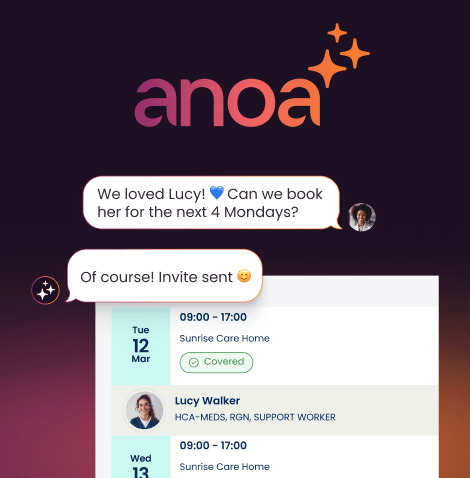
Through our HealthForce Connect platform, you can view detailed staff profiles, including their experience in children's residential settings, qualifications, training specialisms, and feedback from other clients. Need someone with attachment theory training or experience with therapeutic crisis intervention? You can filter for those specific skills. Not sure exactly what you need? Our Anoa AI assistant helps you describe your requirements in plain language and suggests staff with the right background.
The most important feature is the simplest: once you've worked with someone who fits well, you can rebook them with one click. This is how you build real consistency. Staff who know your young people, who understand your routines and therapeutic approach, and who integrate with your team.
Supporting Regulatory Standards During Staff Shortages
Regulatory bodies across the UK are clear: children's homes must have sufficient numbers of suitably qualified staff to meet young people's needs. In England, this means meeting the Children's Homes Regulations 2015. In Scotland, the Care Inspectorate's Health and Social Care Standards apply. In Wales, it's the Regulation and Inspection of Social Care (Wales) Act 2016.
But "sufficient" isn't just about numbers. Inspectors look at whether staff know the young people, understand their care plans, and can respond appropriately to their individual needs. A full rota of unfamiliar faces doesn't meet that standard.
This is why the one-click rebooking matters. When inspectors ask young people about staff, hearing "I know who's working this weekend" is very different from "it depends who the agency sends."
Consistent staffing gives your existing team more capacity for therapeutic work rather than constant induction. It changes what you're able to focus on in supervision and what progress you can track in young people's care plans.
What This Looks Like in Practice
Ad-Hoc Support
You need cover for sickness, holidays, or unexpected absences. We provide short-term support for individual shifts, and you can book the same care worker each time to maintain continuity of care even during temporary cover.
Regular Support
You need additional regular shift cover on an ongoing basis. We can support with longer-term bookings of the same care worker, from weekly shifts up to full-time hours, giving you reliable consistency without permanent recruitment.
Transitional Care
You're managing organizational change, service restructuring, or building your permanent team. We provide high-quality care during transitions, giving you time and peace of mind to make the right long-term decisions without compromising standards.
Frequently Asked Questions
How quickly can you provide residential care staff?
Once you've registered on HealthForce Connect, you can search available staff immediately. For urgent requirements, contact our specialist team directly and we'll work to find suitable workers who can start within 24-48 hours, subject to availability and your specific requirements.
Do your workers understand trauma-informed approaches?
Yes, all our residential care workers have current training in trauma-informed care, positive behaviour support, and safeguarding. Many have additional specialisms in attachment theory, therapeutic crisis intervention, and specific approaches like PACE or Dyadic Developmental Psychotherapy. You can filter for these qualifications when searching.
How do you ensure workers are suitable for children's residential settings?
Every worker has an Enhanced DBS check including the Children's Barred List check. We verify their qualifications (typically Level 3 Diploma in Residential Childcare or equivalent), check professional references from care settings, and ensure their training is current. The HealthForce Connect platform also shows feedback from other residential settings, so you can see how they've performed in similar environments.
Can we use the same workers regularly instead of different people each time?
Absolutely. This is central to our approach. Once you've worked with someone who fits well, you can rebook them directly through the platform with one click. You can also favourite your preferred staff, which makes them immediately visible whenever you're booking a shift. Read about our commitment to staff continuity.
Many settings establish regular arrangements with specific workers who become familiar faces for their young people. Consistency is better for the young people, better for your team, and better for the quality of care.
What if someone isn't the right fit?
You're always in control. HealthForce Connect lets you provide feedback after working with new staff members, which helps you make informed decisions for future cover. If someone isn't the right fit for your environment, you simply don't rebook them.
Are your workers more expensive than direct recruitment?
The comparison isn't straightforward. Direct recruitment involves advertising costs, HR time, DBS processing, training investment, and the risk that someone leaves after a few months. Our workers are available when you need them without those upfront costs or long-term commitment.
What Matters Most
Every children's residential setting serves young people who've experienced instability, often repeatedly. Staffing decisions don't just affect rotas; they shape whether young people experience more disruption or begin to feel safe, known and supported.
When you need residential care staff who are qualified, vetted, and ready to start quickly without compromising on quality, contact Newcross Healthcare. We'll discuss your specific situation and how we can support your team in maintaining the standard of care your young people deserve.














Follow us
" height="82.70270270270271px" id="uM99l5d6e" transform="translate(1.768 0.65)" width="82.70263148648641px"/></svg>)
" height="14.787243243243239px" id="QFyUqCm2f" transform="translate(35.726 34.579)" width="14.787243243243125px"/><path d="M 35.477 5.085 C 35.068 4.062 34.601 3.302 33.812 2.542 C 33.023 1.754 32.292 1.286 31.269 0.877 C 30.48 0.585 29.311 0.205 27.149 0.117 C 24.811 0 24.109 0 18.177 0 C 12.245 0 11.543 0 9.206 0.117 C 7.043 0.205 5.874 0.585 5.085 0.877 C 4.062 1.286 3.302 1.754 2.543 2.542 C 1.754 3.332 1.286 4.062 0.877 5.085 C 0.585 5.874 0.205 7.043 0.117 9.205 C 0 11.543 0 12.245 0 18.177 C 0 24.109 0 24.811 0.117 27.149 C 0.205 29.311 0.585 30.48 0.877 31.269 C 1.286 32.292 1.754 33.052 2.543 33.812 C 3.332 34.601 4.062 35.068 5.085 35.477 C 5.874 35.77 7.043 36.15 9.206 36.237 C 11.543 36.354 12.245 36.354 18.177 36.354 C 24.109 36.354 24.811 36.354 27.149 36.237 C 29.311 36.15 30.48 35.77 31.269 35.477 C 32.292 35.068 33.052 34.601 33.812 33.812 C 34.601 33.023 35.068 32.292 35.477 31.269 C 35.77 30.48 36.15 29.311 36.237 27.149 C 36.354 24.811 36.354 24.109 36.354 18.177 C 36.354 12.245 36.354 11.543 36.237 9.205 C 36.15 7.043 35.77 5.874 35.477 5.085 Z M 18.177 29.604 C 11.865 29.604 6.78 24.489 6.78 18.206 C 6.78 11.923 11.894 6.809 18.177 6.809 C 24.46 6.809 29.574 11.923 29.574 18.206 C 29.574 24.489 24.46 29.604 18.177 29.604 Z M 30.042 9.001 C 28.581 9.001 27.383 7.803 27.383 6.342 C 27.383 4.88 28.581 3.682 30.042 3.682 C 31.503 3.682 32.701 4.88 32.701 6.342 C 32.701 7.803 31.503 9.001 30.042 9.001 Z" fill="rgb(255, 0, 105)" height="36.35427027027028px" id="YNVzbrvoy" transform="translate(24.942 23.825)" width="36.35427027027049px"/><path d="M 41.351 0 C 18.499 0 0 18.499 0 41.351 C 0 64.204 18.499 82.703 41.351 82.703 C 64.204 82.703 82.703 64.204 82.703 41.351 C 82.703 18.499 64.204 0 41.351 0 Z M 63.415 50.498 C 63.298 52.865 62.918 54.473 62.392 55.876 C 61.837 57.337 61.077 58.564 59.821 59.821 C 58.564 61.077 57.337 61.808 55.875 62.392 C 54.473 62.948 52.836 63.328 50.498 63.415 C 48.131 63.532 47.371 63.561 41.351 63.561 C 35.331 63.561 34.571 63.561 32.204 63.415 C 29.837 63.298 28.23 62.918 26.827 62.392 C 25.366 61.837 24.139 61.077 22.882 59.821 C 21.626 58.564 20.895 57.337 20.31 55.876 C 19.755 54.473 19.375 52.836 19.288 50.498 C 19.171 48.131 19.141 47.371 19.141 41.351 C 19.141 35.331 19.141 34.572 19.288 32.204 C 19.404 29.837 19.784 28.23 20.31 26.827 C 20.866 25.366 21.626 24.139 22.882 22.882 C 24.109 21.655 25.366 20.895 26.827 20.31 C 28.23 19.755 29.866 19.375 32.204 19.288 C 34.571 19.171 35.331 19.141 41.351 19.141 C 47.371 19.141 48.131 19.141 50.498 19.288 C 52.865 19.404 54.473 19.784 55.875 20.31 C 57.337 20.866 58.564 21.625 59.821 22.882 C 61.048 24.109 61.808 25.366 62.392 26.827 C 62.947 28.23 63.327 29.866 63.415 32.204 C 63.532 34.572 63.561 35.331 63.561 41.351 C 63.561 47.371 63.561 48.131 63.415 50.498 Z" fill="rgb(255, 0, 105)" height="82.70270270270271px" id="cqBncOQdg" transform="translate(1.768 0.65)" width="82.70263148648641px"/></svg>)
" height="85px" id="sOtZ6DPTJ" transform="translate(0 -0.5)" width="85px"/></svg>)
" height="85px" id="t1fLtFIZ8" transform="translate(0 -0.5)" width="85px"/><path d="M 0 0 L 29.224 37.184 L 32.889 37.184 L 3.724 0 Z" fill="rgb(0, 0, 0)" height="37.18395833333333px" id="cy2z2glNV" transform="translate(26.041 23.407)" width="32.88862500000003px"/></svg>)
" height="85px" id="XJwObJ3H4" transform="translate(0 -0.5)" width="85px"/></svg>)